How to Choose the Fuel Filter for Your Needs?
How to Choose the fuel filter for Your Needs? When it comes to maintaining your vehicle, one…

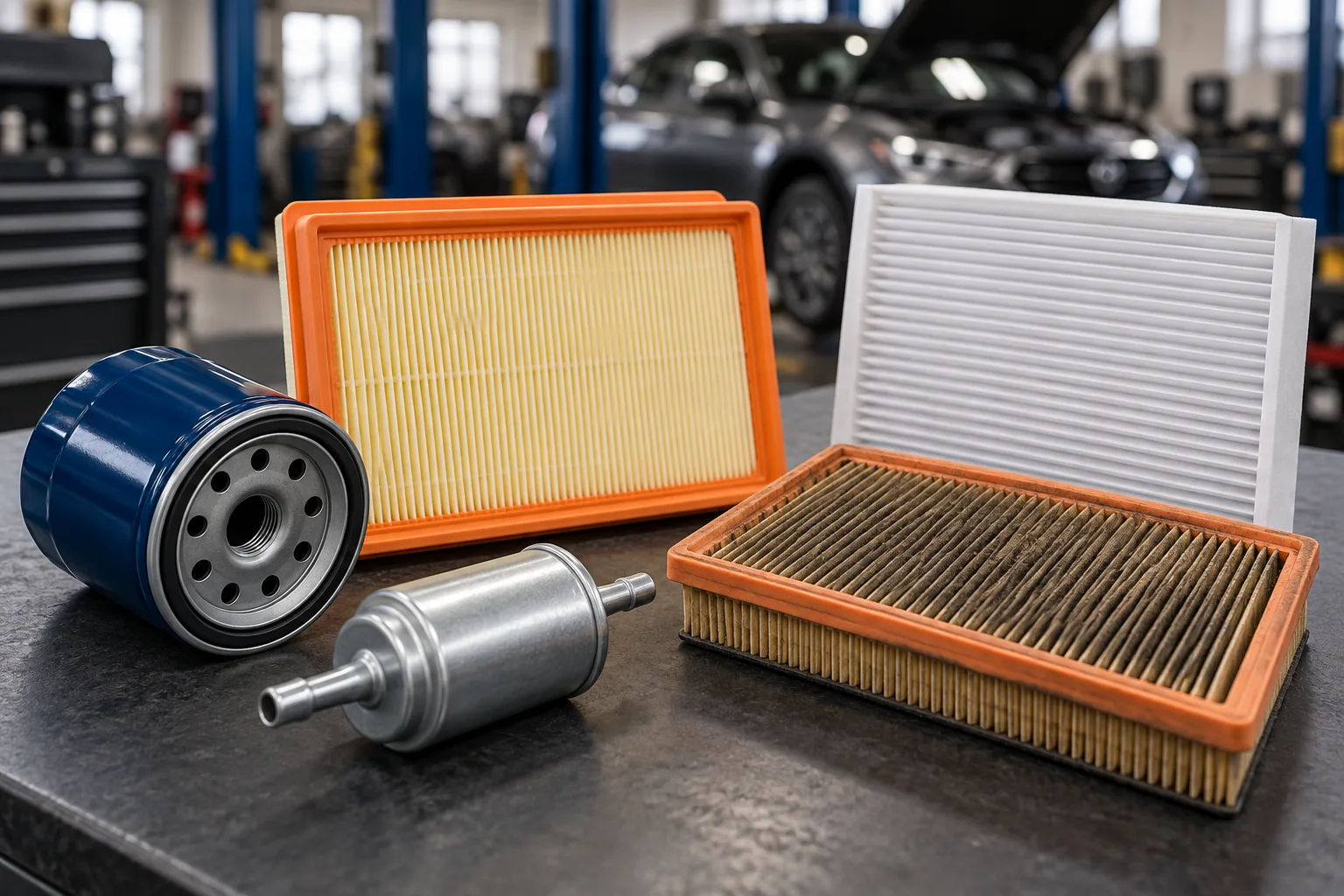
Car filters help protect the systems your vehicle depends on every day. Engine air filters capture airborne dirt, oil filters remove particles from circulating lubricant, fuel filters protect the fuel supply system, and cabin air filters reduce particles entering through the ventilation system.
These components are easy to overlook because much of their work happens out of sight. Yet missing, damaged, incorrectly fitted, or overdue filters can expose expensive components to contamination or restrict the flow of air and fuel.
Understanding these risks helps drivers make maintenance a priority—and helps workshops and distributors explain why correct fitment and dependable filter quality matter.
A missing filter removes a protective barrier. A damaged element or poor seal can allow contaminants to bypass the filter media. A clogged filter, meanwhile, can restrict flow.
Removing a clogged filter is not a maintenance solution. The correct approach is to replace or service it according to the vehicle manufacturer’s instructions.
An engine needs air for combustion, but that air can carry dust and other particles. The engine air filter captures contaminants before they reach sensitive components.
Without effective filtration, abrasive dirt can enter the intake and contribute to premature wear. A torn element, damaged gasket, or poorly closed housing can allow unfiltered air through even when a filter is installed. This makes both filter condition and proper sealing important. mann-filter.com
A heavily contaminated air filter can restrict airflow and reduce available engine power. However, a dirty filter does not automatically cause a dramatic increase in fuel consumption in every modern fuel-injected vehicle.
Check the element and housing seals during maintenance, especially when driving on dusty roads or around construction areas. Follow the vehicle’s replacement schedule and any instructions for severe operating conditions.
Engine oil lubricates moving parts and carries contaminants through the lubrication circuit. The oil filter helps capture particles that could otherwise contribute to wear.
Effective filtration works alongside suitable engine oil and timely oil changes. Installing a new filter does not restore degraded oil, and changing the oil does not make an overdue filter suitable for continued use.
When restriction becomes excessive, many full-flow lubrication systems use a bypass valve to maintain oil supply. Depending on the vehicle, this valve may be inside the filter or elsewhere in the engine. Oil passing through the bypass does not pass through the filter media. Cold, viscous oil can also trigger bypass operation, so bypass does not always indicate a clogged filter. FRAM
The bypass valve is a protective feature, not a reason to postpone replacement.
Choose an oil filter with the correct thread, gasket, dimensions, and operating specifications. Never run an engine with its required oil filter physically removed; doing so can leave the lubrication circuit open.
Fuel may contain dirt, rust, and other contaminants. The fuel filter helps prevent these particles from reaching downstream components, including injectors and, depending on its location, pumps.
Inadequate filtration can contribute to component wear, injector problems, and unreliable operation. Diesel applications that require water separation also need the appropriate fuel-water separator; not every fuel filter performs this function. mann-filter.com
A clogged fuel filter creates a different problem: restricted fuel delivery. Possible symptoms include difficult starting, hesitation, reduced power, or stalling. These symptoms can have other causes, so proper diagnosis matters.
Some vehicles have an accessible service filter, while others integrate filtration into an in-tank module. Follow the specified maintenance procedure rather than assuming every fuel filter needs the same replacement interval.
The cabin air filter serves passengers rather than the engine. It captures particles carried through the heating and air-conditioning intake.
Without it, more dust, pollen, and other airborne particles may enter through the ventilation system. Some cabin filters include activated carbon for additional odor reduction, but a standard particle filter should not be assumed to remove gases or every unpleasant smell. FRAM
A heavily loaded cabin filter can reduce airflow from the vents, affecting comfort and windshield demisting. If ventilation becomes noticeably weaker, inspecting the cabin filter is a useful starting point, although the blower and other components may also require attention.
A filter that fits into the available space is not necessarily suitable for the application. Incorrect seals, connections, or operating specifications can compromise its function.
Before buying a replacement, confirm:
Do not assume all filters are washable. Follow the instructions for the exact product; unsuitable cleaning methods can damage filter media.
Founded in 1994, Haiye manufactures oil, engine air, fuel, and cabin filters—the main automotive filtration categories covered in this article. www.haiyeauto.com
For workshops and distributors, reliable supply starts with clearly defined applications and specifications. An approved sample should be supported by technical documents and relevant inspection requirements so repeat orders can be assessed consistently.
For a Haiye OEM or private label project, define fitment, performance requirements, product identification, and authorized packaging artwork before production. Clear approval criteria give buyers a practical basis for evaluating the initial product and later batches.
Filters are small components with important responsibilities. They can only perform their intended function when correctly selected, installed, and maintained.
Keep filter inspection on your maintenance checklist, replace damaged or overdue elements, and investigate changes in engine performance or ventilation airflow promptly.
Looking for automotive filters for your distribution or private label business? Send Haiye your OE numbers, vehicle applications, target quantities, and technical requirements to discuss a suitable supply proposal.