Automotive Filter Quality Control for OEM Brands | Haiye

For automotive filter distributors, importers, and private label brands, quality means more than a filter that looks correct when it arrives. The product must fit its intended application, meet agreed technical requirements, and maintain those requirements when the next order is produced.
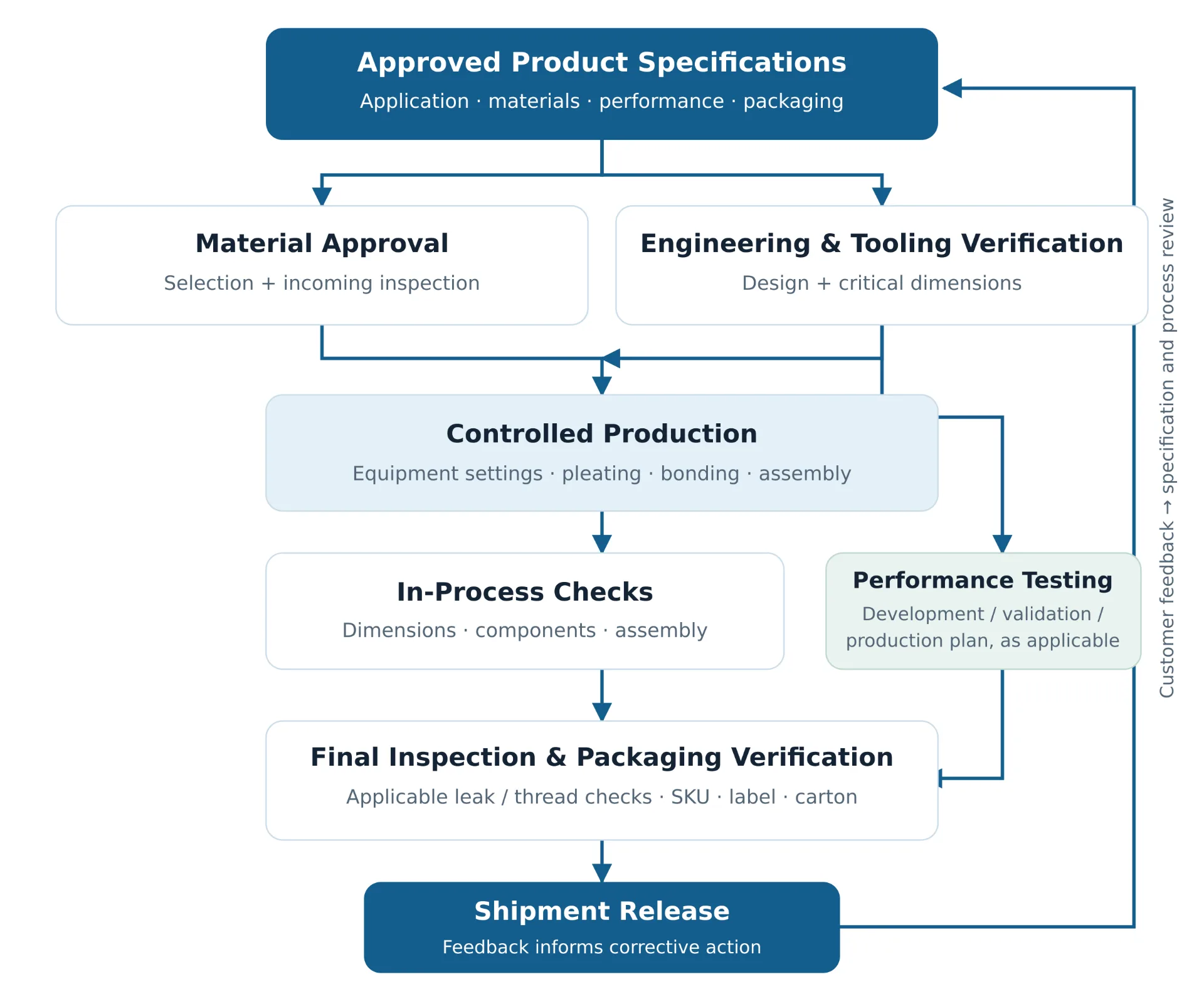
Haiye’s approach to automotive filter quality control connects material selection, engineering, tooling, production inspection, performance evaluation, and packaging verification. The aim is to control variation throughout manufacturing rather than relying on a single check at the end.
This matters especially for buyers managing many SKUs. A mixed label, an incorrect thread, or an unapproved material change can create problems far beyond the factory floor. Clear specifications and reviewable evidence help protect the brand on the box.
How Haiye’s Quality Verification Process Works
1. Define the Product Before Selecting Materials
Quality control starts with a clear description of what the customer is buying. That includes the vehicle application, OE reference, dimensions, materials, functional requirements, and packaging identification.
For private label filter programs, an economy, standard, or premium positioning should be supported by meaningful product specifications. Different packaging alone does not establish a different performance level.
Depending on the application, media options may include cellulose, synthetic, or blended materials. Cabin filter programs may also involve particle filtration media or activated carbon for additional adsorption functions. Material selection should follow the agreed performance target and project feasibility.
The objective is to select suitable materials for the application—not to assume the most expensive material is always the right choice.
2. Inspect Incoming Materials and Components
A selected material still needs to meet its requirements when it arrives at the factory. Incoming inspection provides a checkpoint before materials enter production.
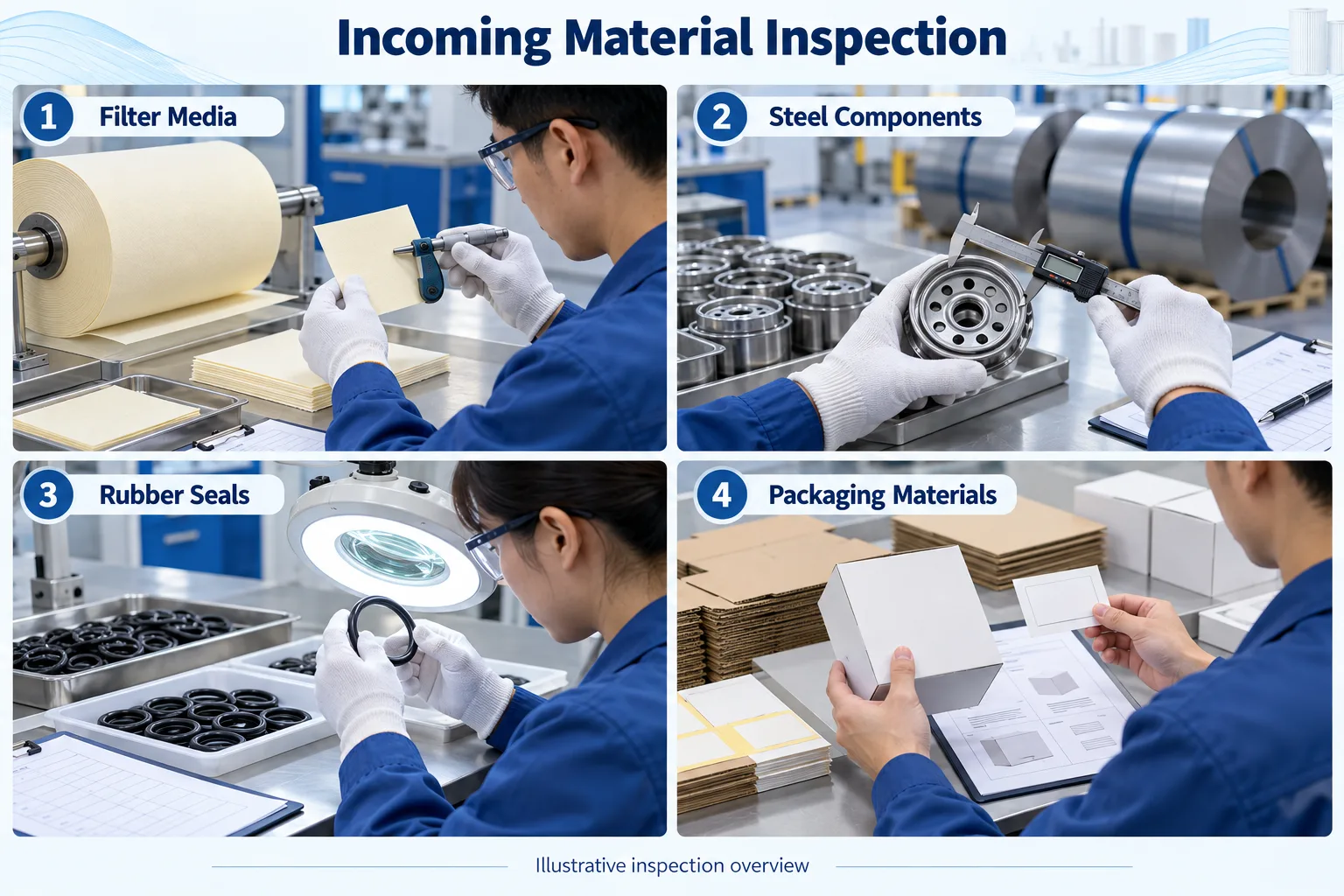
Relevant checks can cover filter media, steel, rubber components, adhesives, and packaging materials. Inspection scope should reflect the product and its approved requirements.
For a spin-on filter, material and component variation can affect forming, threading, sealing, and assembly. For a filter element, media and bonding materials influence construction. For private label orders, boxes and labels must also match the correct product program.
Controlling the complete product includes controlling what the customer receives in the carton.
3. Verify Engineering, Tooling, and Critical Dimensions
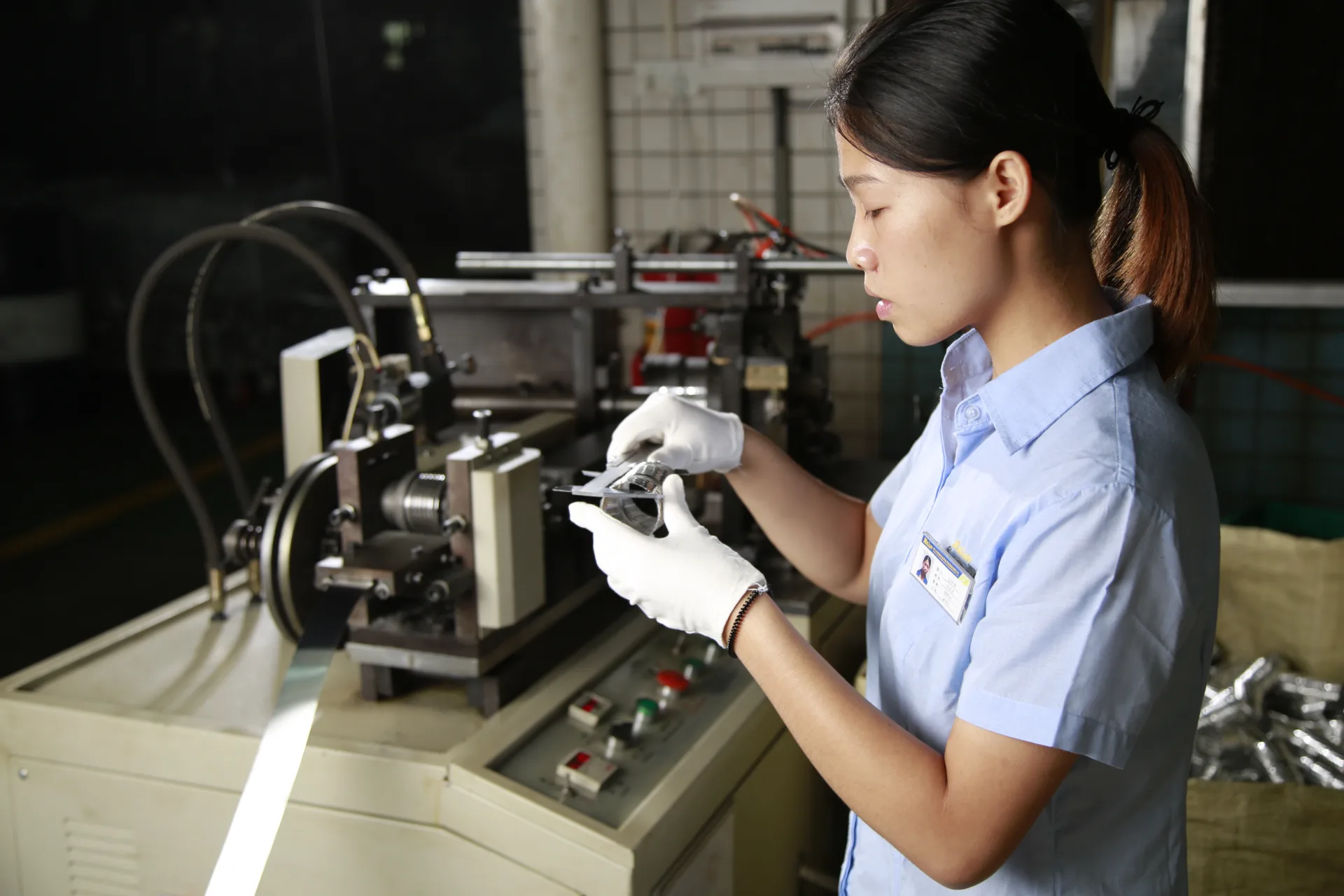
Automotive filters are application-specific. Height, diameter, sealing surfaces, threads, and component positioning can affect installation and function.
Haiye’s in-house mold development connects tooling decisions with engineering and production. This supports the management of critical dimensions and the development of new applications, subject to technical review.
Tooling ownership alone does not prove consistent output. Dimensional verification, equipment control, and appropriate tooling maintenance are still necessary. For buyers, the useful evidence is a product that remains within its approved tolerances across repeat orders.
4. Combine Automated Production With In-Process Inspection
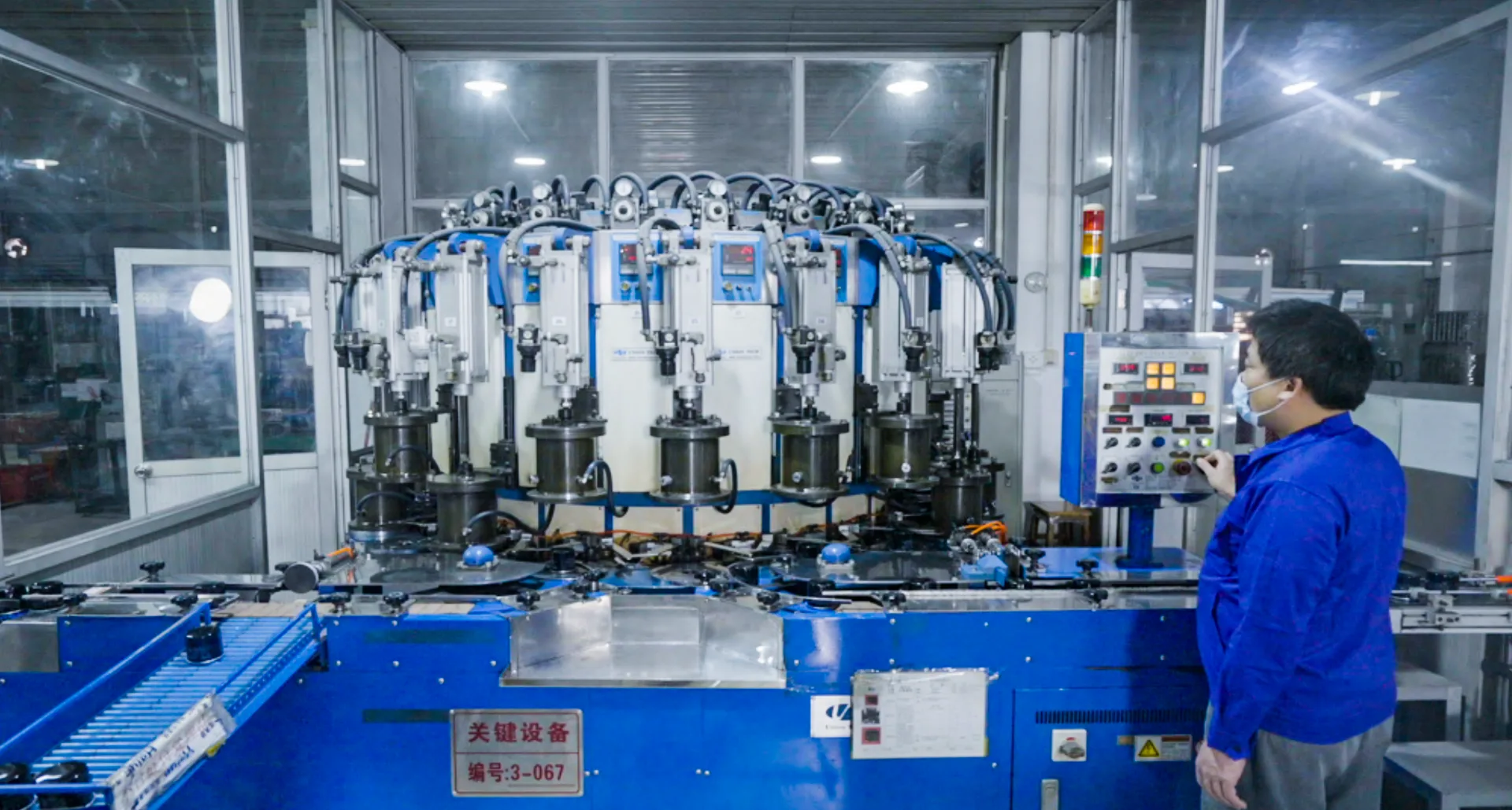
Haiye’s manufacturing equipment includes automated metal housing forming, tapping, welding, assembly, and packaging processes. Automation supports repeatable operations, but it works alongside inspection rather than replacing it.
During element production and assembly, relevant control points include pleat geometry, element dimensions, adhesive application, curing, component positioning, and assembly condition.
For a spin-on oil filter, the media, center tube, end caps, seals, and specified internal valves must work together. A suitable filter medium cannot compensate for an incorrect thread or an unsuitable valve specification.
Automation supports repeatability. Inspection checks whether the result meets the approved specification.
In-process checks give the production team a chance to identify deviations before they continue into later stages. This is particularly valuable when a small variation could be repeated across a large order.
5. Verify Performance With Product-Specific Evidence
Appearance inspection cannot establish filtration performance. Buyers evaluating an automotive filter manufacturer should distinguish dimensional and assembly checks from functional testing.
Depending on the filter category and project, evaluation may address particle filtration efficiency, contaminant capacity, flow restriction, pressure differential, structural integrity, or other functional characteristics.
These tests belong to different stages of product development and quality verification. A development test, sample approval report, batch sampling check, and routine production inspection serve different purposes.
| Verification area | What it helps assess | What a buyer should review |
|---|---|---|
| Filtration efficiency | Particle capture under defined conditions | Exact model or media, particle size, method, and result |
| Contaminant capacity | Contaminant loading to a defined endpoint | Test conditions and endpoint; not an automatic mileage promise |
| Flow and restriction | Resistance at a specified flow | Flow rate, fluid or air conditions, and pressure difference |
| Sealing / leak checks | Assembly sealing under specified conditions | Test pressure, method, limits, and inspection frequency |
| Functional components | Design-specific requirements, such as oil-filter valves | Applicable specification and verification method |
For oil filters, applicable methods within the ISO 4548 series can provide a basis for evaluating defined characteristics. A report should identify the exact method, tested product, conditions, and result. Referencing a standard does not establish that every filter has passed every test in the series.
6. Check the Finished Filter and Its Packaging
Final inspection should follow the product’s inspection plan. Relevant checks may include appearance, dimensions, threads, sealing, printing, and packaging identification.
Haiye uses automatic dry leak testing equipment for applicable spin-on products. Leak checks can identify sealing defects that are not apparent from an external visual inspection. They do not establish filtration efficiency or replace separate structural or functional tests.
Packaging verification checks that the filter, part number, label, barcode where specified, individual box, and master carton correspond correctly. For a distributor managing many applications, placing the right filter in the wrong box can cause incorrect installation and returns.
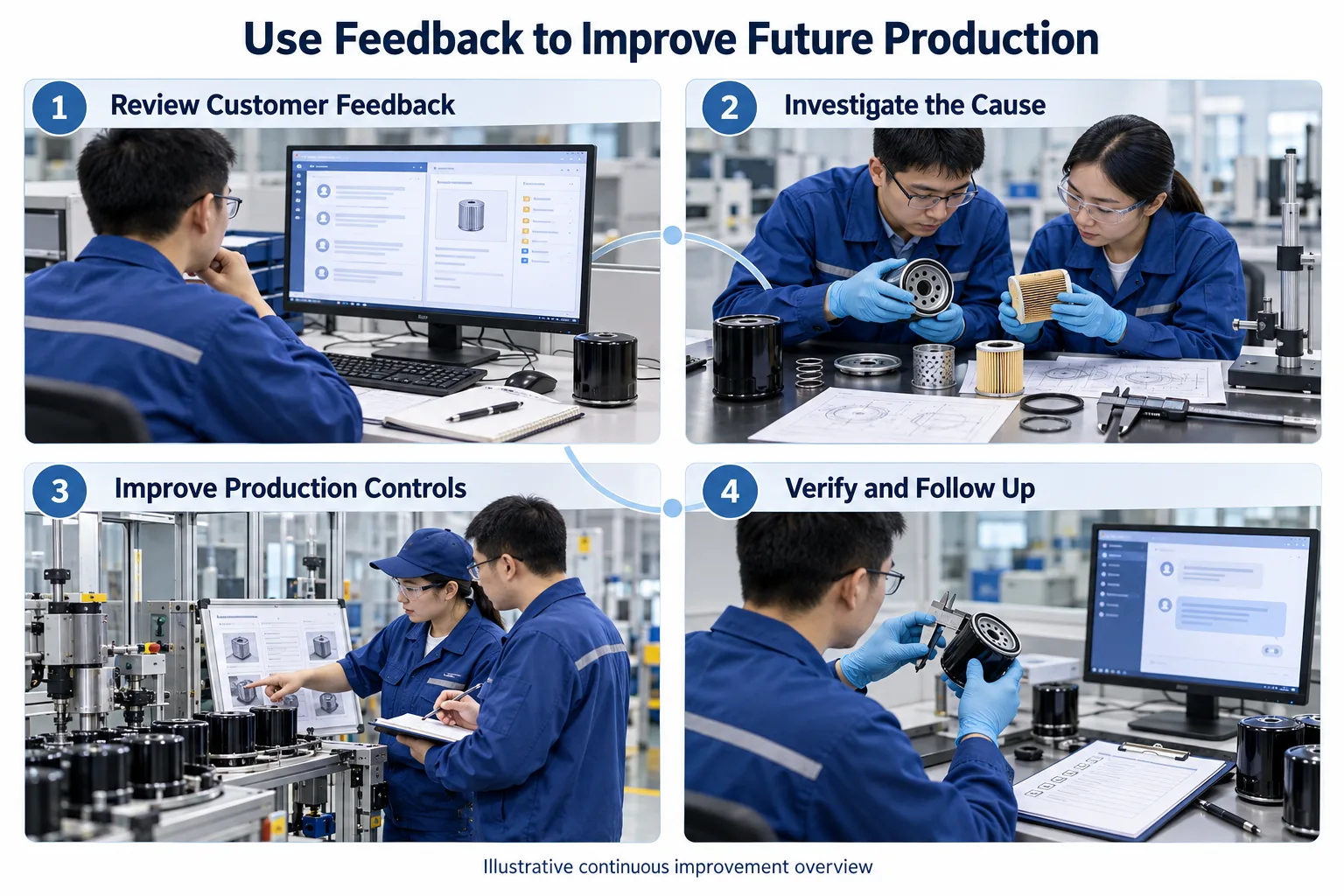
7. Use Feedback to Improve Future Production
Quality management also needs a response when a deviation is identified. A useful investigation records the product reference, batch information where available, installation details, symptoms, and supporting photographs or returned samples.
The technical review should determine the cause, assess whether other products may be affected, and define corrective action. The outcome can inform material controls, process settings, inspection requirements, or technical documents.
For OEM customers, this feedback loop matters because the product carries their brand. Reliable supply includes the ability to investigate a problem and use the findings to improve future production.
What Private Label Buyers Should Agree Before Production
A sample gives buyers a physical reference, but it should not be the only definition of a bulk order. Approved technical documents and acceptance criteria establish what production must follow.
- Vehicle applications and OE references.
- Critical dimensions, tolerances, and component requirements.
- Materials and supported performance requirements.
- Sample approval scope and relevant test evidence.
- Inspection plan and acceptance criteria.
- Authorized artwork, labels, product numbers, and packaging.
- Product identification and agreed traceability requirements.
- Review and approval of material or design changes.
For customized projects, confirm the production details and agreed sample approval before mass production. A demonstration sample should not silently replace the technical requirements for later batches.
Consistent Quality, Batch After Batch
Haiye has manufactured automotive filtration products since 1994. For distributors and private label brands, the practical value of a manufacturing partner lies in how engineering, materials, production, and verification work together.
The objective is straightforward: produce to the agreed specification and maintain it when the customer reorders.
Send Haiye your OE references, target quantities, technical requirements, and private label packaging needs to discuss a manufacturing proposal and the verification requirements for your project.
Frequently Asked Questions
How is automotive filter quality verified?
Verification combines material checks, dimensional and assembly inspection, appropriate functional tests, and packaging checks. The methods and frequency depend on the filter and approved inspection plan.
Does leak testing prove filtration performance?
No. Leak testing evaluates sealing under defined conditions. Particle efficiency, contaminant capacity, and flow characteristics require different evaluations.
Does automated manufacturing guarantee identical filters?
No. Automation helps reduce process variation, while material controls, tooling maintenance, inspection, and change management help keep products within approved requirements.
What should an OEM buyer request before approving an order?
Request the application references, technical specification, agreed samples, relevant test evidence, inspection criteria, and packaging details. Confirm how later changes and repeat orders will be controlled.